
Tampilkan postingan dengan label Asian Food. Tampilkan semua postingan
Tampilkan postingan dengan label Asian Food. Tampilkan semua postingan
Korean Beef BBQ Recipe
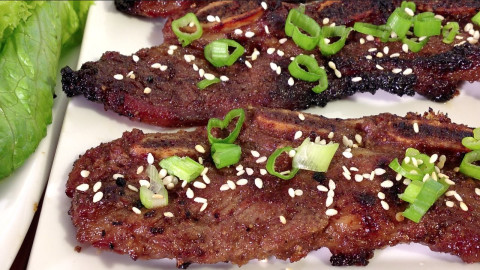
Korean BBQ short ribs call Galbi
2 pounds short rib
1 medium asian pear
1 medium yellow onion
2 red thai chile
5 cloves garlic
1/4 cup soy sauce
1 1/2 tablespoons rice wine
3 tablespoons brown sugar
3 tablespoons honey
2 tablespoons sesame oil
1/2 teaspoon crushed peppercorns
Dipping sauce ssamjang
3 tablespoons season soy bean paste
1 tablespoon red pepper paste
1/4 cup chopped yellow onion
1 stark green onion sliced
1 teaspoon sauté minced garlic
1/2 tablespoon sesame oil
1/2 tablespoon toasted sesame seeds
2 teaspoons brown sugar
Kung Pao Sweet Potatoes Recipe

Hi again!
I know, I know. It's been a while since I've posted a new recipe. Between running Plate & Pencil, teaching, and putting on Tangra Spring, I've been a little short on time, to put it mildly. Sadly, things like creating new recipes can sometimes go on the back burner.
Also, this winter sure was long, wasn't it? I think the lack of sunshine, the frigid April that felt like March, and rainy May that felt like April made most of us feel a little less than inspired in the kitchen. Sometimes all I wanted was soup, spaghetti, pizza, soup, spaghetti, pizza, rinse, repeat. Anything that could be made or purchased in 10 minutes or less.
(Okay, there were also many days of making dumplings en mass, to store up for the week ahead.)
Luckily, creating new recipes for Tangra Spring, the Indian-Chinese vegetarian dinner series I created with Chitra from ABCD's of Cooking, brought the fun back into cooking again. We had yet another great night cooking for our guests, aided by some fantastic local produce from Good Eggs, like radishes, ramps, and bok choy microgreens.
And these sweet potatoes.

We over-ordered the number of sweet potatoes needed for our signature dish (sweet potato and coconut dumplings with South Indian spices). So I've had these babies sitting on my kitchen counter for at least a couple of weeks. Today I decided to use them in a vegetarian kung pao dish.
Now, many people think that in Chinese cooking, in order to have a vegetarian main course, you need to use tofu, tempeh, seitan, or another protein substitute. So many Chinese restaurants do, so it seems like an easy default. But sometimes it's nice to get a little creative with your ingredients and find other vegetables that work well in the wok.
I've already posted about Kung Pao Brussels Sprouts, my favorite vegetarian kung pao dish to do in the winter. Today I wanted to try my method with these really nice leftover local sweet potatoes from Rogowski Farm.
The sauce ingredients are altered slightly from my Kung Pao Chicken recipe to compensate for the lack of marinade ingredients. And I also added some nice homemade chili oil for extra smokiness, though you can also use a good quality store-bought brand.

Colorful, no?

Oh yes, you also may have noticed in the photos of the finished dish that there are cashews instead of peanuts. In China, for fancier occasions restaurants would use cashews instead of peanuts, usually in more upscale spots or for large banquet dinners. As for me, this was what I happened to have in my cupboards. So fancy lunch it was! You can go either way.
Chinese cooking is just so darn versatile.
_______________________________________________
Kung Pao Sweet Potatoes
Serves 4
Ingredients
- 1 pound sweet potatoes, washed and peeled
- 2 tablespoons peanut or vegetable oil
- 8 to 10 dried red chilis
- 5 scallions, white and green parts separated and thinly sliced
- 2 cloves garlic, minced
- 1 teaspoon minced or grated ginger
- ¼ cup unsalted dry-roasted peanuts or cashews
Sauce:
- 1 tablespoon Chinese black vinegar, or substitute good-quality balsamic vinegar
- 1 tablespoon soy sauce
- 2 teaspoons hoisin sauce
- 2 teaspoons chili oil, homemade or store-bought
- 1 teaspoon sesame oil
- 1 tablespoon sugar
- 1 teaspoon ground Sichuan pepper
Instructions
- Cut the sweet potatoes into bite-sized pieces about 1/2-inch around.
- Prepare the sauce: In another bowl, combine the vinegar, soy sauce, hoisin sauce, sesame oil, chili oil, sugar, and Sichuan pepper. Stir until the sugar is dissolved and set aside.
- You may need to turn on your stove’s exhaust fan, because stir-frying dried chilis on high heat can get a little smoky. Heat a wok or large skillet over high heat until a bead of water sizzles and evaporates on contact. Add 1 tablespoon of the peanut oil and swirl to coat the base. Add the chilis and stir-fry for about 30 seconds, until the chilis have just begun to blacken and the oil is slightly fragrant. Add the sweet potatoes and stir-fry for 5 to 6 minutes, continuously stirring, until the outsides are golden brown.
- By now the sweet potatoes should be golden brown on the outside, and the pan a little dry. Create a well in the middle of the pan and pour in the remaining 1 tablespoon of peanut oil. Add the scallion whites, garlic, and ginger, and stir-fry for 30 seconds. Pour in the sauce and mix to coat the other ingredients. Allow the mixture to simmer for 1 to 2 minutes to thicken. Stir in the peanuts or cashews and cook for another 1 minute. Transfer to a serving plate, sprinkle the scallion greens on top, and serve.
Edamame Japan Recipe
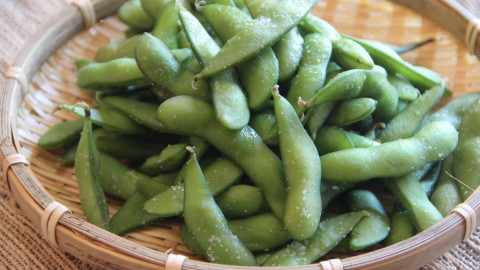
Edamame have become so popular outside Japan today. Edamame is green (young) soy beans in pods. It is usually served as an appetizer with your favorite drinks. There are frozen Edamame you can buy all year round so you might not realize that Edamame is actually in season in summer and started as a summer food. So in the middle of a hot summer, when you drink ice cold beer before dinner, you eat Edamame watching an evening baseball game on TV. This is the absolute right way to eat it in Japan (or it was, 20 years ago).
It is very hard to buy fresh Edamame in the US, but frozen works just fine. Salt is the only seasoning we use, but you can experiment with something else if you want. There are shelled Edamame, too, but we recommend to use the ones in pods. It’s like peanuts. Yeah, it is easy to eat just the beans, but it’s really not the same. Edamame doesn’t have to be an appetizer you eat only at restaurants. Serve hot or cold, however you like. Just don’t forget your beer!
Ingredients
- 1 bag Edamame, frozen
- salt
Instructions
- Boil water in a big pot with 1 Tbsp salt.
- Add Edamame and cook for 5 minutes. Strain and sprinkle on some salt.
Katsudon Japan Recipe
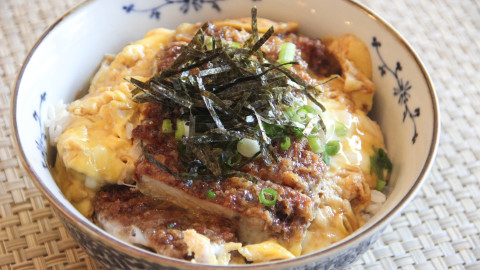
Katsudon is Tonkatsu (deep-fried pork) and eggs cooked in a sweet and salty broth and placed over rice. Don (donburi) means a bowl, and Donburi dishes are a popular kind of casual rice dish in Japan. Because you have to prepare Tonkatsu first, it is a little bit of work involved since you cannot cook everything in one pan. Katsudon is a hearty dish compared to other Japanese food because Tonkatsu is breaded and deep-fried, but the taste is so good that you will not mind the extra calories from the oil. Besides, since deep-fried Tonkatsu is cooked in tasty broth and is crunchy yet juicy, you may not notice the grease at all (well, maybe, just maybe, calories might stay in, or near, your tummy).
Katsudon was once portrayed as a hearty, soul food in Japanese culture. A typical scene for it was in TV detective dramas: a criminal gets interrogated by a tough detective intensely first, and then the detective asks if the criminal wants to have Kastudon. While they eat, the detective asks how the criminal’s mother is doing in his home town in the country, and as you may guess, the criminal confesses with tears. That’s a pretty old fashioned drama, and we don’t see it much today (fortunately?), but Katsudon was the symbol of tasty and warm food that can melt even the coldest part of a criminal’s heart 
Just like Oyakodon, Katsudon is a very typical lunch dish you can get at casual restaurants. Udon noodle shops, small corner restaurants, and bento shops all have this tasty dish. If you don’t want to deal with a lot of cooking oil at home, it is much easier to eat out or buy Katsudon from stores. However, a lot of us here are outside Japan and may not have good Japanese restaurants nearby who serve tasty Katsudon. So once again, we can make it at home! And it really is not as difficult to make as you might think.
We didn’t here, but you can add sliced brown onion and cook in the sauce before adding Katsu and eggs if you like. Also the recipe below is for one person because it is easier to make individually, but you can multiply and make a bunch at once in a bigger pan when you serve for your entire family.
Ingredients
- 1 Tonkatsu
- 1/4 C Dashi
- 1 Tbsp soy sauce
- 1/2 Tbsp sugar
- 1/2 Tbsp Sake
- 1/2 Tbsp Mirin
- 1-2 eggs
- green onions, chopped (optional)
- Steamed Rice
- roasted seaweed (Nori), thinly sliced
Instructions
- Cut Tonkatsu into strips, set aside.
- In a small frying pan, add Dashi, soy sauce, sugar, Sake, and Mirin, and cook at medium heat until it boils. Reduce heat to low-medium.
- Add cut Tonkatsu to the sauce in the pan. Beat egg(s) in a small bowl and pour over the Tonkatsu. Cover and cook for 1 minute. Sprinkle chopped green onions if you like.
- Slide Tonkatsu and egg(s) with sauce over rice in a bowl.
- Sprinkle sliced Nori on top.
Yakisoba Japan Recipe
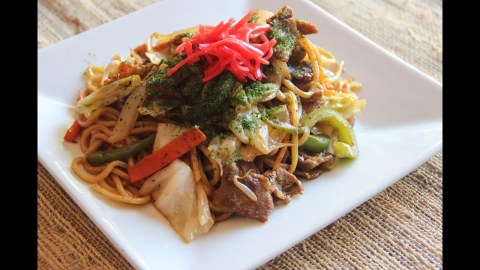
Yakisoba Japan Recipe
Yakisoba is Japanese stir fried noodles. It is served with Yakisoba sauce, similar to Tonkatsu or Okonomiyaki sauce. Yakisoba is usually fried with sliced pork and vegetables like cabbage and bean sprouts. It is a very popular casual food (or snack) everyone likes in Japan. You can find Yakisoba at many places like Okonomiyaki restaurants, festivals, supermarket delis, and of course, home. Yakisoba is a great light or quick meal. Kids stop at a little shop for Yakisoba after school, and people stop for it at a food court in a mall during shopping. One of the best Yakisoba can be found at summer night festivals. Street vendors cook Yakisoba on a big grill. I don’t know what they do to it, but they make superb Yakisoba. If you are making your own Yakisoba, you can put your favorite meat and vegetables; chicken, beef, or even squid. The must-have toppings are Aonori and Benishoga. The fragrance of Aonori and spicy Benishoga accentuate the flavor of Yakisoba so well. Even when your Yakisoba is mediocre, they can upgrade the dish for you. We use Chuka Men, Chinese style noodles, in Yakisoba, but the dish is not Chinese at all. It is actually very Japanese, and nothing like Chow Mein other than they are both noodle dishes. Yakisoba sauce is very similar to Okonomiyaki sauce (you can even substitute Okonomiyaki sauce for Yakisoba sauce), though it is a little bit more like Worcester sauce and thinner. We made the Yakisoba sauce using Tonkatsu sauce and Worcester sauce which are in our pantry. You can of course purchase Yakisoba sauce if available, but this may be a good alternative. Chuka Men for Yakisoba is usually sold as packages of fresh noodles in the refrigerated section at Japanese or some Asian markets. Each package of noodles (square) is for one serving, and sometimes comes with Yakisoba seasoning powder. The seasoning powder is a convenient thing and doesn’t taste bad, I admit, so you may opt to use that as your Yakisoba sauce. For people who do not have access to any Asian markets at all, dried spaghetti can be used instead of Chuka Men. Similar to what we did in Ramen, boil dried spaghetti in boiling water (2L) with baking soda (2Tbsp), and cook according to the package. You may not want to use fresh pasta because it may be too soft to stir fry after boiling. We know it is not exactly the same as Chuka Men, but it can be a pretty good substitution for those who cannot get Chuka Men.Get all the ingredients ready, fry them together, and enjoy your own Yakisoba! (We recommend using a non-stick pan to make Yakisoba to avoid noodles getting stuck on the pan.)
Ingredients
- 1/3 lb (150g) pork, thinly sliced
- 1 small onion
- 2 C cabbage, cut into about 2" squares
- 2 C bean sprouts
- 1/2 small carrot
- 1/4 green bell pepper
- 1 Tbsp oil
- Aonori
- Benishoga
- 2 packages Chuka Men (Chinese style noodles)
- salt and pepper
- 3 Tbsp Tonkatsu sauce
- 2 Tbsp Worcester sauce
- 1/2 Tbsp soy sauce
- 1/2 Tbsp Mirin
Yakisoba Sauce
Instructions
- Cut sliced pork into bite size pieces. Prepare the vegetables: slice onion, carrot, and bell pepper thinly; cut cabbage into 2"squares; wash and strain bean sprouts. Mix all the ingredients for Yakisoba Sauce.
- In a large frying pan, add oil and heat at medium high heat. Cook meat first until browned. Add onion, carrot, and bell pepper and cook about 1-2 minutes. Then add cabbage and bean sprouts, and cook until vegetables are wilted. Once water seeps out from vegetables, add Chuka Men, stir under the vegetables, lower heat and cover, and cook about 2 minutes until noodles soften.
- When noodles get loose and soft, keep stirring to mix with vegetables, then add sauce and coat the whole thing for a couple of minutes. (Season with salt and pepper to taste.)
- Place Yakisoba on the plate; sprinkle with Aonori and put Benishoga on top.


Langganan:
Komentar (Atom)

