Tampilkan postingan dengan label Info. Tampilkan semua postingan

Chocolate Zuccini Muffins Recipe

CHOCOLATE ZUCCHINI MUFFINS

These chocolate zucchini muffins are not too sweet and somewhat healthy.

INGREDIENTS

1 ½ cup all-purpose white flour⅔ cup whole wheat flour (or substitute white flour)1 cup granulated sugar, plus 1½ tbsp. for garnish3 Tbsp non-alkalized or Dutch-process unsweetened cocoa powder2 tsp baking powder (used Clabber Girl Baking Powder)½ tsp salt1 cup chocolate chips, divided⅓ cup canola oil2 medium. zucchinis (7-inch long), cut into chunks⅓ cup low-fat or non-fat vanilla yogurt2 eggs, large⅔ cup chopped walnuts

DIRECTIONS

Recipe for Chocolate Zucchini Muffins slightly adapted from Clabber Girl
  1. Line standard muffin pan with 12 muffin cup liners or use baking spray to coat pan. Preheat oven to 375 degrees Fahrenheit.
  2. Place both flours, baking powder, sugar, cocoa powder and ½ cup chocolate chips in a food processor. Pulse until chocolate chips are finely ground. While the processor is running, add canola oil in a low stream. Scrape sides and pulse until combined. Place chocolate mixture in a large bowl.
  3. Add chopped zucchini to food processor and pulse until finely chopped (you should have about 1½ cups). Add zucchini to chocolate mixture.
  4. Place eggs and yogurt in processor and pulse until blended. Add to zucchini/chocolate mixture. Mix until just combined. Fold in remaining chocolate chips.
  5. Divide batter among muffin cups until almost full. Top muffins evenly with 1½ tablespoon of sugar. Bake in middle rack of oven for 20-24 minutes.
  6. Cool on wire rack for 5 minutes. Keep in airtight container at room temperature for 3 days (If it's hot the sugar tops may melt a bit).
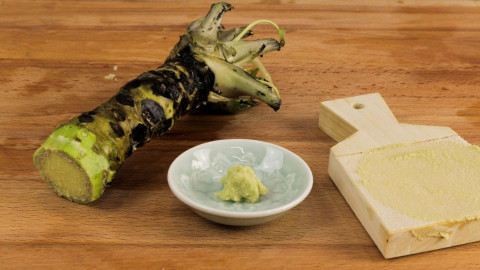
How To Make Wasabi

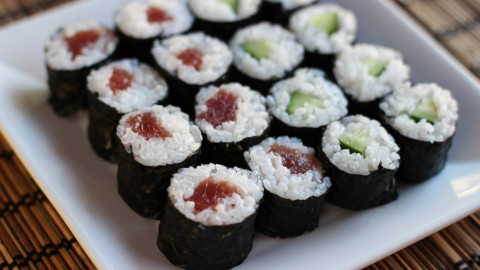
Sushi Rolls Japan Recipe


Sushi Rolls or Hosomaki are a very basic but popular sushi in Japan.  Hoso means thin and maki means roll. We want to say “thin” because there are also thick rolls, Futomaki.  While Futomaki has a lot of fillings such as cooked vegetables and sweet fish flakes, Hosomaki rolls only have one skinny filling inside.  Because of the simplicity of ingredients and cooking technique, Hosomaki is suitable for home cooking as well as restaurant food.
The two most popular Hosomaki are Tekkamaki, tuna roll, and Kappamaki, cucumber rolls, and those are the recipes here.  Tekkamaki uses raw tuna which has a pretty red color against white rice. The name Tekka, hot iron, is said to come from this color.  You only need a little bit of fish for each roll, the price of this roll is very reasonable at restaurants.  Kappamaki is only cucumber and so is perfect for people who don’t eat raw fish.  There is something for everybody in sushi rolls!
Hosomaki filling can be something other than tuna and cucumber. Takuan (pickled radish) and cooked Kanpyo (cooked gourd) are popular.  People in Japan also like Nattomaki (fermented soybeans) which is a little hard to swallow, literally, for Kansai (western Japan) people since a lot of them don’t like Natto.  Believe it or not, tuna salad is a staple ingredient for rolls now too.
We didn’t specify the amount of ingredients so you can adjust how much rice and fillings can be in a roll for your taste.  However, if you use our Sushi Rice recipe and use 1/4 cup in each roll, you’ll probably get 7-8 rolls.  We recommend you have extra rice and fillings to experiment and have fun making them.
You may need a couple times to practice to roll (I did!), but you’ll get the hang of it.  (Watching the video really helps with this technique.)  Make varieties of rolls for dinner or better yet for parties, and your fiends and family will be very impressed!

Ingredients
Instructions
  1. Cut Roasted Seaweed in half (4 x 7 1/2" or 10 x 19cm). Cut tuna into 1/2" (1cm) thick pieces and 7 1/2" (19cm) long. Cut cucumber into the same size, cutting out seeds. (It's OK not to have one 7 1/2" long piece, just add pieces together to make the total length.)
  2. Put a sushi mat flat on your work surface with the bamboo slats left to right, so you can roll the mat away from you. Place a piece of seaweed on the sushi mat with one of the seaweed's long sides close to the front edge of the sushi mat (the edge near you). Spread about 1/4 cup sushi rice on the seaweed leaving a 1" (2.5cm) space along the far edge of the seaweed. Place tuna or a cucumber strip on the middle of rice. Holding the filling down, roll from the front end of the mat guiding with the sushi mat toward the other end. Tighten the rolls like roll cakes, pulling the mat to tighten. Remove the roll from the mat.
  3. Cut a roll into 8 pieces. Serve with soy sauce and Wasabi.

Kung Pao Sweet Potatoes Recipe

Hi again!

I know, I know. It's been a while since I've posted a new recipe. Between running Plate & Pencil, teaching, and putting on Tangra Spring, I've been a little short on time, to put it mildly. Sadly, things like creating new recipes can sometimes go on the back burner.
Also, this winter sure was long, wasn't it? I think the lack of sunshine, the frigid April that felt like March, and rainy May that felt like April made most of us feel a little less than inspired in the kitchen. Sometimes all I wanted was soup, spaghetti, pizza, soup, spaghetti, pizza, rinse, repeat. Anything that could be made or purchased in 10 minutes or less.
(Okay, there were also many days of making dumplings en mass, to store up for the week ahead.) 
Luckily, creating new recipes for Tangra Spring, the Indian-Chinese vegetarian dinner series I created with Chitra from ABCD's of Cooking, brought the fun back into cooking again. We had yet another great night cooking for our guests, aided by some fantastic local produce from Good Eggs, like radishes, ramps, and bok choy microgreens. 
And these sweet potatoes. 
Kung Pao Sweet Potatoes | Appetite for China
We over-ordered the number of sweet potatoes needed for our signature dish (sweet potato and coconut dumplings with South Indian spices). So I've had these babies sitting on my kitchen counter for at least a couple of weeks. Today I decided to use them in a vegetarian kung pao dish.
Now, many people think that in Chinese cooking, in order to have a vegetarian main course, you need to use tofu, tempeh, seitan, or another protein substitute. So many Chinese restaurants do, so it seems like an easy default.  But sometimes it's nice to get a little creative with your ingredients and find other vegetables that work well in the wok. 
I've already posted about Kung Pao Brussels Sprouts, my favorite vegetarian kung pao dish to do in the winter. Today I wanted to try my method with these really nice leftover local sweet potatoes from Rogowski Farm
The sauce ingredients are altered slightly from my Kung Pao Chicken recipe to compensate for the lack of marinade ingredients. And I also added some nice homemade chili oil for extra smokiness, though you can also use a good quality store-bought brand. 
Kung Pao Sweet Potatoes | Appetite for China
Colorful, no?
Kung Pao Sweet Potatoes | Appetite for China
Oh yes, you also may have noticed in the photos of the finished dish that there are cashews instead of peanuts. In China, for fancier occasions restaurants would use cashews instead of peanuts, usually in more upscale spots or for large banquet dinners. As for me, this was what I happened to have in my cupboards. So fancy lunch it was! You can go either way. 
Chinese cooking is just so darn versatile.
_______________________________________________

Kung Pao Sweet Potatoes

Serves 4
Ingredients
  • 1 pound sweet potatoes, washed and peeled
  • 2 tablespoons peanut or vegetable oil
  • 8 to 10 dried red chilis
  • 5 scallions, white and green parts separated and thinly sliced
  • 2 cloves garlic, minced
  • 1 teaspoon minced or grated ginger
  • ¼ cup unsalted dry-roasted peanuts or cashews
Sauce:
  • 1 tablespoon Chinese black vinegar, or substitute good-quality balsamic vinegar
  • 1 tablespoon soy sauce
  • 2 teaspoons hoisin sauce
  • 2 teaspoons chili oil, homemade or store-bought 
  • 1 teaspoon sesame oil
  • 1 tablespoon sugar
  • 1 teaspoon ground Sichuan pepper
Instructions
  1. Cut the sweet potatoes into bite-sized pieces about 1/2-inch around.
  2. Prepare the sauce: In another bowl, combine the vinegar, soy sauce, hoisin sauce, sesame oil, chili oil, sugar, and Sichuan pepper. Stir until the sugar is dissolved and set aside.
  3. You may need to turn on your stove’s exhaust fan, because stir-frying dried chilis on high heat can get a little smoky. Heat a wok or large skillet over high heat until a bead of water sizzles and evaporates on contact. Add 1 tablespoon of the peanut oil and swirl to coat the base. Add the chilis and stir-fry for about 30 seconds, until the chilis have just begun to blacken and the oil is slightly fragrant. Add the sweet potatoes and stir-fry for 5 to 6 minutes, continuously stirring, until the outsides are golden brown.
  4. By now the sweet potatoes should be golden brown on the outside, and the pan a little dry. Create a well in the middle of the pan and pour in the remaining 1 tablespoon of peanut oil. Add the scallion whites, garlic, and ginger, and stir-fry for 30 seconds. Pour in the sauce and mix to coat the other ingredients. Allow the mixture to simmer for 1 to 2 minutes to thicken. Stir in the peanuts or cashews and cook for another 1 minute. Transfer to a serving plate, sprinkle the scallion greens on top, and serve.
Source: http://appetiteforchina.com/recipes/kung-p...

Edamame Japan Recipe


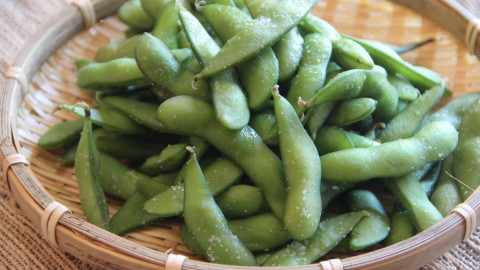
Edamame have become so popular outside Japan today.  Edamame is green (young) soy beans in pods.  It is usually served as an appetizer with your favorite drinks.  There are frozen Edamame you can buy all year round so you might not realize that Edamame is actually in season in summer and started as a summer food.  So in the middle of a hot summer, when you drink ice cold beer before dinner, you eat Edamame watching an evening baseball game on TV.  This is the absolute right way to eat it in Japan (or it was, 20 years ago).
It is very hard to buy fresh Edamame in the US, but frozen works just fine.  Salt is the only seasoning we use, but you can experiment with something else if you want.  There are shelled Edamame, too, but we recommend to use the ones in pods.  It’s like peanuts.  Yeah, it is easy to eat just the beans, but it’s really not the same.  Edamame doesn’t have to be an appetizer you eat only at restaurants.  Serve hot or cold, however you like.  Just don’t forget your beer!
Ingredients
  • 1 bag Edamame, frozen
  • salt
Instructions
  1. Boil water in a big pot with 1 Tbsp salt.
  2. Add Edamame and cook for 5 minutes. Strain and sprinkle on some salt.

Make Coffee When Traveling

making cofee when travelling


I need coffee within about thirty minutes of waking up. Two reasons: I've convinced myself that I function better after drinking it and, more importantly, I love the ritual of making coffee at home.
For a long time, this ritual was sadly disrupted anytime I would travel. You know the situation--a packet of instant coffee or, at best, some pre-ground beans and a Mr. Coffee machine.
And then I figured out how to ensure I drink good coffee wherever and whenever I travel. Good news: So can you.

BEANS
The biggest issue with making coffee when traveling honestly isn't with Mr. Coffee (thought there are better options that I'll outline here), it's with the beans themselves. Coming across great coffee isn't an issue theses days and there are more high quality roasters than ever (Stumptown, Parlor, Tim Windelboe, and Intelligentsia, just to name a few). So, assuming you're either nearby a retailer that sells great coffee or have access to the internet, bring your own coffee on your trip.
GRIND
So you get your hotel room, premium beans in hand, and have absolutely nothing to grind them with. While you could pre-grind enough for the duration of your trip before leaving, you won't be getting the freshest coffee possible, as beans should be brewed as soon as possible after grinding. The solution? I purchased a smallhand-grinder from Hario. For $35, this conical grinder yields a precise grind (as opposed to inconsistent blade grinders) and is extremely portable. Match your grind consistency to brew method with this handy guide.
BREW
Finally, you'll need something to actually make the coffee with. Electric kettles are commonplace in hotels and, while they don't typically have the goose-neck spouts that are ideal for making pour-over coffee, they'll get the job done.
My brew method of choice at home and especially when on the road is a simple ceramic Bee House dripper. Unlike v60 and other popular pour-over methods, the Beehouse doensn't require multiple, timed pours. For more on how to use the Bee House, head over to Stumptown Coffee Roasters' excellent education department
Throw in a couple of #4 size paper coffee filters and that's it. You've got a perfect cup of coffee no matter where you are. You'll never have to settle for instant again.

Southwest Monster Taco

Jack-Southwest-Taco
A while back, Jack in the Box introduced two Monster Tacos to their menu: Bacon Ranch and Nacho Cheese. Looks like they're welcoming a third creation to their lineup with the Southwest Monster Taco. If there was a month to drop more Monster Tacos, this is it.
The Southwest Monster Taco is made with seasoned taco meat and topped with shredded cheddar cheese, black beans, grilled onions, corn and a Southwest sauce. To fit all that Southwest stuffing appropriately, the ingredients are served in a slightly longer hard taco shell.
Customers can purchase the Southwest Monster Taco for $1.79 with prices varying depending on the region. The taco will be available for a limited time at all participating Jack in the Box locations.

Comfort Food Is A Myth


By Tom Jacobs
What's your favorite "comfort food"? You know you have one -- a treat you use to soothe bruised feelings following some distressing event.
Well, guess what: You're kidding yourself. A new studyfinds comfort foods are no more effective at lifting moods than any other foods -- or even sitting quietly without consuming a calorie.
"Negative moods naturally dissipate over time," writes a University of Minnesota research team led by psychologist Traci Mann. "Individuals may be giving comfort food 'credit' for mood effects that would have occurred even in the absence of the comfort food."
That tub of Haagen-Dazs may not have magical powers after all.
Mann and her colleagues describe four experiments, three of which were similarly structured. At an introductory session, participants were specifically asked "What foods would make you feel better if you were in a bad mood?", as well as other foods they enjoy but do not place into that category.
Then, during two sessions scheduled at least one week apart, groups of students (100 in total) watched 18-minute videos composed of film clips found to elicit "feelings of anger, fear, anxiety, and/or sadness." At one session, after filling out a questionnaire designed to determine their mood, they were given a generous portion of their self-described comfort food (chocolate being the most popular, followed by ice cream and cookies).
At the other, they were given either one of the non-comfort foods they enjoyed, such as almonds or cashews (Experiment 1); a granola bar, which served as a neutral food (Experiment 2); or nothing at all, meaning they simply sat in silence for three minutes (Experiment 3). Afterwards, all filled out the mood questionnaire for a second time.
"Participants' moods improved over time," the researchers report. However, they add, "this happened to the same extent regardless of which type of food they ate, or whether they at any food at all."
This finding held true no matter how much they consumed, nor how confident they were that their comfort food would be particularly effective. Belief in such foods' power is extremely widespread: After listing their favorites, 81 percent of participants either agreed, or strongly agreed, with the statement "I am confident that eating this food would make me feel better."
These findings have obvious implications for diet and weight loss. "We found no justification for people to choose comfort foods when they are distressed," the researchers conclude. "Removing an excuse for eating a high-calorie or high-fat food may help people develop and maintain healthier eating habits, and may lead them to focus on other, food-free methods of improving their mood."
In other words, we've just lost yet another rationalization for eating junk. That's awfully distressing, but it's good to know the feeling will pass -- with or without the help of a Hershey's bar.

8,000-Calorie Breakfast

The-Hibernator-Breakfastt
If you feel guilty after inhaling a McDonald's Breakfast Platter, the UK has a morning dish that will definitely make you hang your head in shame. Mark Winder is the owner of the Bear Grills in Congleton, Cheshire. Inspired by "Man vs. Food," Winder came up with a ridiculous breakfast platter one might see in an animated cartoon. He calls it the Hibernator.
At about 8,000 calories, the Hibernator consists of eight pieces of bacon, eight sausages, four hash browns, four pieces of toast, four potato waffles, four pieces of fried bread, a four-egg cheese omelette, beans, mushrooms, tomatoes and large chips. Don't bother ordering a Diet Coke with your meal, however, as the platter also comes with a large milkshake to wash everything down.
Because of its high-calorie count, Winder requires all of his customers to sign a legal disclaimer before attempting the breakfast. Because y' know, death.
As with most food challenges, customers have the opportunity to earn their place in the restaurant hall of fame. If they are able to finish that mountain of starch and fat in a thirty-minute window, they can earn back their £19.95 ($25.18 US).
The monstrous meal is served on a turkey platter and weighs about seven pounds. According to Winder, no one has yet been able to finish the Hibernator in one sitting.

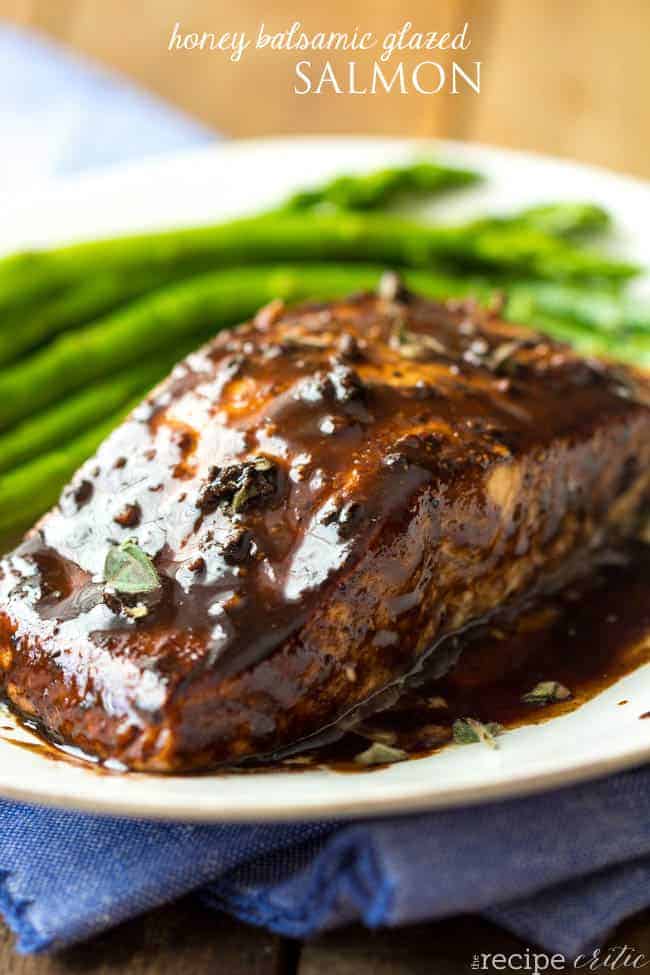
Honey Balsamic Glazed Salmon


honeybalsamicglazedsalmontitle
We live a few blocks away from our neighborhood Immigration Market.  It is so fun to take family walks there and get their famous gelato and snow cones.  It is also nice when I run out of something for a recipe and need to make a quick trip to the store.  But they have the best meats I have ever had.  Nobody can compare with their quality.  We love getting burgers to grill in the summertime.  But their salmon.  Wow.  It is incredible.  The guy helping me explained to me the different types that they had and the different benefits.  I never had a clue what the difference in salmon was.  He picked this one out for me and told me I would love it.
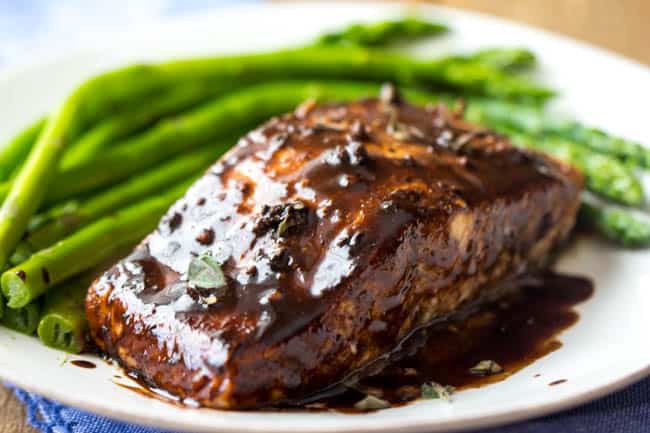
Not only was this the best salmon I have ever had, you won’t believe the glaze on this.  The honey balsamic glaze was the perfect finishing touch to this salmon.  The flavor was absolutely incredible making this an instant favorite.  It was flaky, perfectly cooked and had an incredible glaze.  If you are a salmon lover like me, you are going to love this one!
AUTHOR: 
PREP TIME:  
COOK TIME:  
TOTAL TIME:  
SERVES: 4
 
A delicious honey balsamic glaze that makes this salmon incredible!
INGREDIENTS
  • 4 (5 ounce) salmon fillets
  • 1 teaspoon olive oil
  • 2 cloves garlic, minced
  • 1 tablespoon honey
  • ⅓ cup balsamic vinegar
  • 4 teaspoons Dijon mustard
  • salt and pepper to taste
  • 1 tablespoon chopped fresh oregano (for garnish)
INSTRUCTIONS
  1. Preheat oven to 400 degrees. Line a baking sheet with aluminum foil and spray with cooking spray.
  2. In a medium saucepan cook the garlic until tender in the olive oil about 2-3 minutes. Add honey, balsamic vinegar, dijon mustard, and salt and pepper to taste. Simmer for about 3 minutes until it slightly starts to thicken. Remove from heat.
  3. Place the salmon fillets on the aluminum lined baking sheet. Brush the salmon with the balsamic glaze but reserve half for brushing on a the end.
  4. Bake for about 6-10 minutes until flesh flakes easily with a fork. Brush them remaining glaze.
_MG_6724